The Camino Frances
The best-known Camino route, at least for folks in the US, is the Camino Francés. It starts in St Jean Pied de Port, France, and ends about 800 km (500 miles) later in Santiago de Compostela, Spain. It's been a pilgrimage path for over 1,000 years. Most people today don't walk for religious reasons, but everyone is welcomed warmly.
You don't have to walk the whole thing. Pick up a pilgrim credential and you can start anywhere along the route. If you want the Compostela, the official certificate of completion, you need to walk (or ride a horse) at least the last 100 km into Santiago, or cycle the last 200 km. Most walkers who want the shortest option start in Sarria.
Terrain
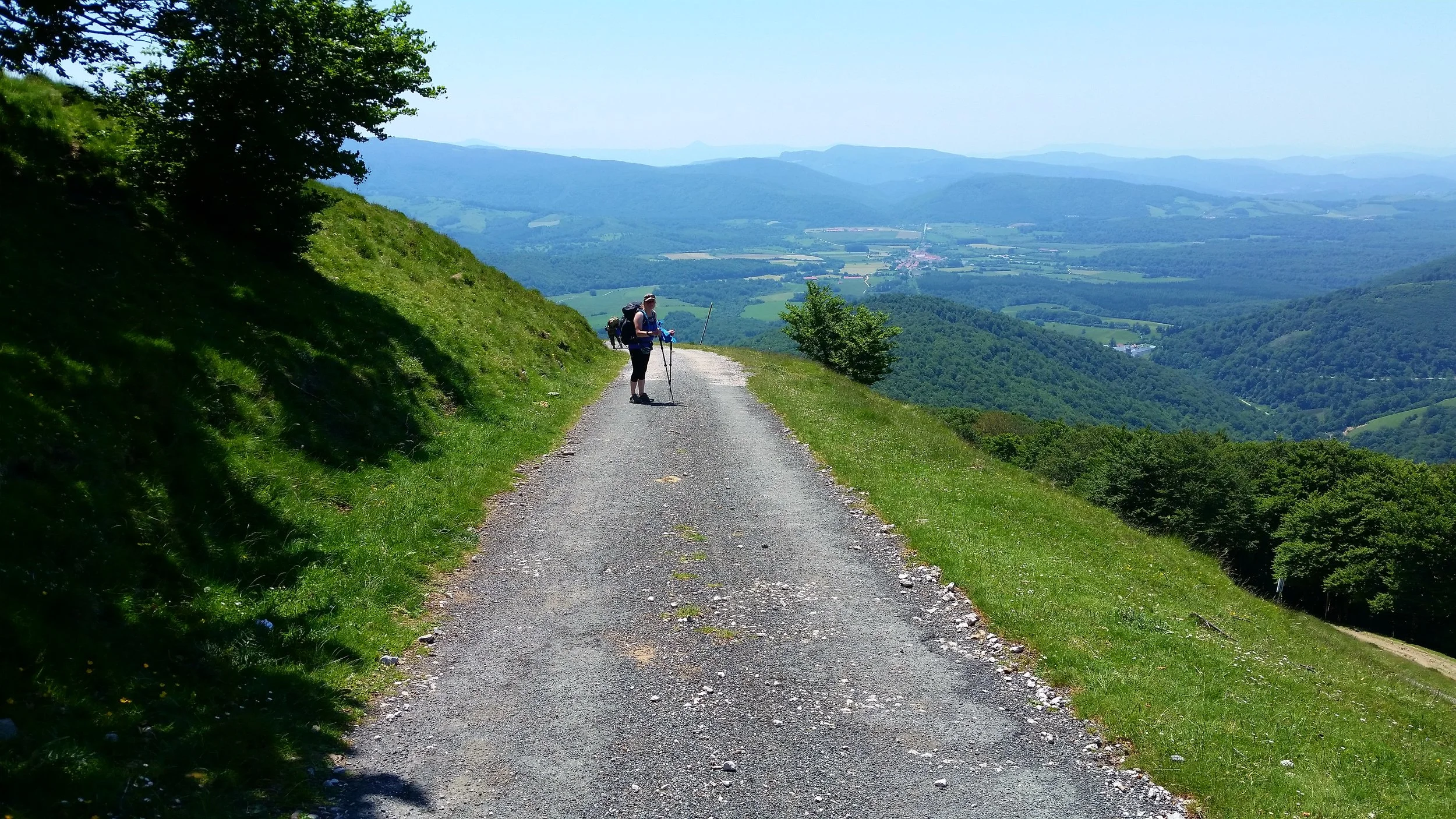
The terrain changes a lot. There's a tough climb over the Pyrenees in the first couple of days and the long, flat stretch of the Meseta in the middle. There's no technical climbing, no ropes, no ice walls. But walking 10 to 20 miles a day for a month adds up, on the feet and on the mind.

Weather
Weather in northern Spain depends on when you go. It can run anywhere from freezing rain and ice to summer heat well over 100°F. Just managing your comfort can be a real challenge. If you love heat and sun, summer is your season. If you like cold mornings and quiet trails, winter might be just right.
You don't need survival gear
You won't need to carry food for days, a tent, a stove or a water filter. Unless you want to, of course. The Camino is what you make it. You walk village to village on well-marked roads and trails. On most of the Francés there's a bar, a small market or a place to sleep every 6 to 10 km. The longest gap without services is around 17 km.
Lodging
Most pilgrims stay in albergues, hostels just for pilgrims who carry a credential. They range from tiny private places with 6 beds to huge municipal ones with hundreds. Most are simple: bunk beds, showers and toilets. Expect roughly €10 to €20 a night. Hotels and private rooms are everywhere too. More on the Lodging page.
Food
Everyone who walks a Camino has opinions about the food. Almost every village has a little bar serving coffee, drinks, snacks and the legendary bocadillo, a big sandwich of ham, chorizo or cheese on a crusty baguette that can feed you for two meals. Most restaurants offer a three-course pilgrim menu, usually with bread, water and wine, for around €13 to €16. Usually a great deal.
Water
Water is everywhere. There are drinkable fountains in even the smallest village squares, and some date back to the Middle Ages. Most bars will fill your bottle if you buy a coffee. Outside winter, you're rarely more than 15 km between water sources. In winter, when places close, it can stretch to 25 km.
Gear
Gearing up is half the fun for a lot of pilgrims. And along the Francés, there are plenty of places to repair, replace, or impulse-buy more gear.
This is just the overview. The details are on the pages that follow.